
A Turning Point for Italy: Admiral Paolo Sandalli on His Father and the Allied Choice of 1943

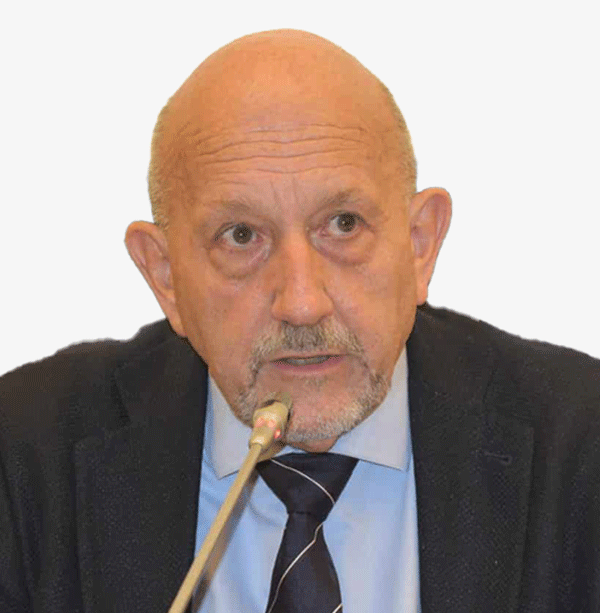


An Italian admiral reflects on his father during one of the most dramatic moments in Italy’s history, when defeat, regime change, armistice, and civil war gave way to a new conflict that returned the nation to the community of free and democratic states.
As part of its ongoing series highlighting members of the Allies Museum National Committees, The Allies Museum – World War II Liberation of Italy sat down with Vice Admiral (Ret.) Paolo Sandalli of the Italian Navy, the son of General Renato Sandalli, who served as Minister and Chief of Staff of the Royal Italian Air Force during the critical months following the armistice of September 1943, to discuss the significance of Italy’s co-belligerence and its return to the Allied camp.
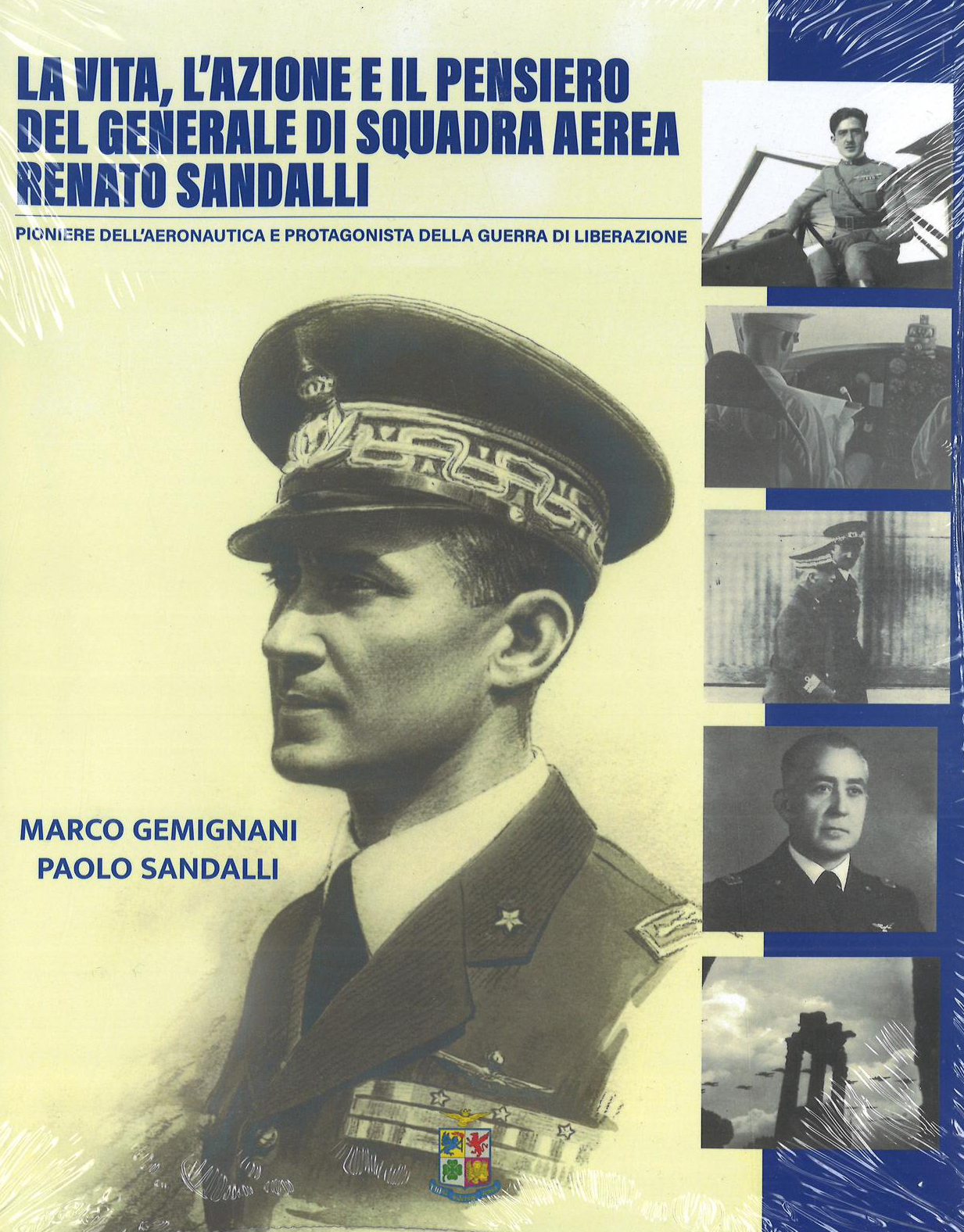
Admiral Sandalli is the co-author of the recently published book The Life, Thought, and Action of Air Marshal Renato Sandalli, available through the Italian Ministry of Defense.
Admiral Sandalli, could you tell us where your interest in the period of Italy’s war of liberation comes from, and in particular in Italian co-belligerence alongside the Allies?
I have always had a passion for history. I focused in particular on the period you refer to for two reasons.
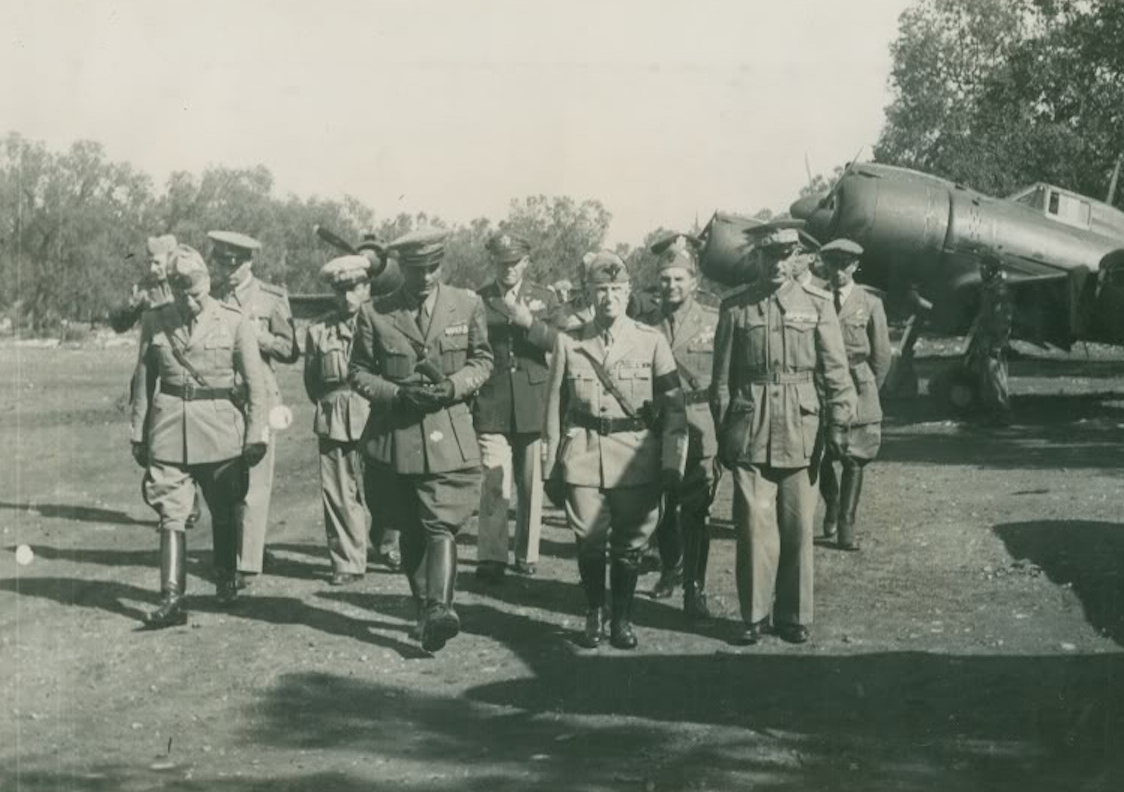
The first is that my father, General Renato Sandalli, played a significant role in those events, serving as Minister and Chief of Staff of the Royal Italian Air Force from 27 July 1943, following the fall of Fascism, until June 1944, when Rome was liberated. The second reason lies in the fact that this historical period, particularly dramatic for Italy.
It saw the country simultaneously confront a lost war, a change of regime, an unexpected armistice, a civil war, and a new conflict that ultimately brought Italy back into the community of free and democratic nations and into the fold of its traditional alliances.
This was a historical turning point that still deeply affects the lived experience of the Italian people and the characteristics of our state. Nevertheless, in the postwar period it was not sufficiently valued, in part because of the civil war, which represented a major obstacle to any attempt at shared commemoration. My father devoted great effort to achieving national reconciliation and restoring the unity of the Fatherland in the values of the Risorgimento. Today, eighty years later, the time has come to help Italians rediscover this period.
In the book on your father, The Life, Action and Thought of Air Marshal Renato Sandalli, it emerges that the Royal Italian Air Force, under his command, despite the enormous difficulties following 8 September 1943 and the extremely limited resources available, immediately took up the fight against the Germans and for the liberation of the country. Can you tell us about some lesser-known episodes or aspects of that period?
On the eve of the armistice, the Air Force had just over 300 combat-ready aircraft, having heroically sacrificed itself on all fronts while fighting with a clear inferiority of means. These were mostly obsolete aircraft, which had reduced operational capability to a bare minimum.
Despite the terrible crisis, including a moral one, caused by an armistice that arrived suddenly and in itself led to a collapse of morale, and despite the dramatic crises of conscience that arose, the majority of personnel remained faithful to their oath.
A little-known fact is that most of the aircraft still operational were saved from capture by the Germans, and that the Armed Force succeeded in reconstituting itself in southern Italy under the orders of General Sandalli and the legitimate government. Few people know that the chain of command between Air Force leadership and operational units was almost never broken, despite enormous communication difficulties.

The first actions against the Germans began as early as 9 and 10 September, well before co-belligerence was formally institutionalized. It is also largely unknown that aviators resumed flying and fighting alongside the Allies using aircraft kept operational with improvised means, reusing wreckage from damaged or shot-down planes.
The majority refused to cooperate and were interned in concentration camps. Those who enlisted did so mainly to avoid direct conscription into the Luftwaffe. There were nevertheless defections until May 1944, with aviators managing to reach the South. My book contains moving pages of testimony explaining the motivations of those who remained in the North.
Out of pure love for their country, they took risks that very few combatants in the world would have accepted, thereby earning the respect of their former adversaries, who decided to equip the Air Force with new aircraft precisely at the end of my father’s tenure.As for those who aligned themselves with the Italian Social Republic, it must be remembered that much personnel was caught by surprise by the armistice in the North, already occupied by the Germans.
Do you still have objects that belonged to your father from the period of the conflict? What do they represent for you?
What remains to me are primarily mementos from the First World War, in which he also took part, and a few photographs. More than material objects, however, I have his writings and reflections on that historical period.
Rather than what they represent for me personally, I prefer to say what they represent for the Armed Forces, for the Air Force, and for the Italian people. They constitute his spiritual testament.
They are profound reflections dedicated to the servicemen who were able to save Italy when everything seemed lost, securing better peace conditions for the country and restoring its honor.
They also contain his heartfelt appeal that, after the civil war, Italy might experience true national reconciliation under the banner of the unity of the Fatherland and the ideals of the Risorgimento.
Over the course of your long career in the Italian Navy, how do you see today the choice made by your father and his colleagues to bring Italy back into the democratic West?
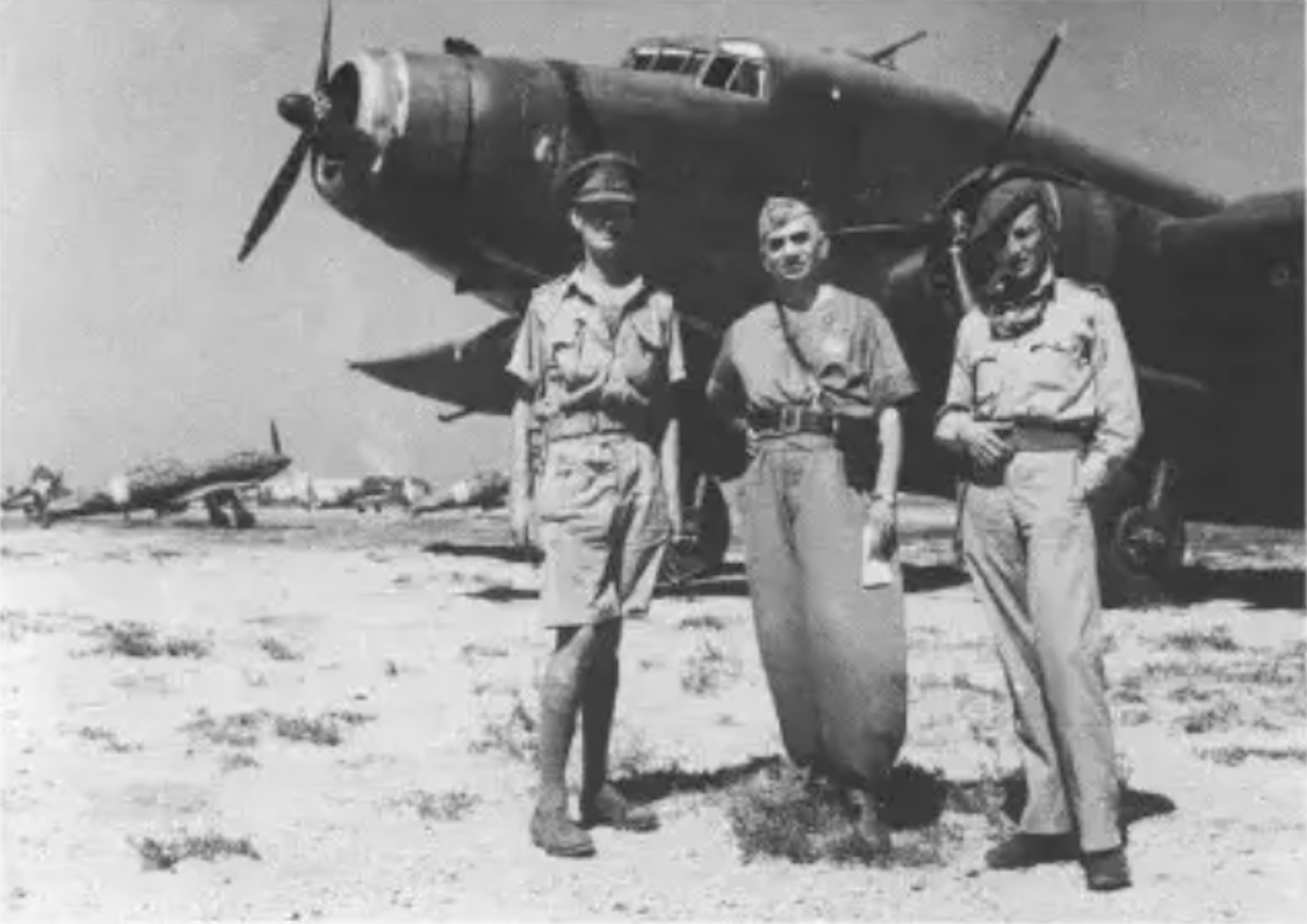
The Badoglio government was a technical and military government. Those men not only fully carried out their duties as soldiers, but as servants of the state they also had the political and strategic vision to understand that Italy’s destiny was inseparably linked to that choice. Only that decision could return the country to the fold of its traditional values, the ideals of the Risorgimento, and its historic alliances. That choice made it possible to secure a fair peace treaty and guaranteed Italy more than eighty years of democracy and prosperity.
Within NATO institutions, it is taken for granted that Italy and Germany re-entered the community of free nations thanks to the decisions made during that period. Italy remained united and was admitted immediately.
Germany paid a much higher price, being divided and partially occupied by the Soviet Union, and joined NATO and the United Nations years later. Italy was spared that fate, and this is undeniably due to the choices made by my father and his colleagues during co-belligerence.
The memoirs of my father’s colleague Raffaele Guariglia, Foreign Minister of the first Badoglio government, even recount Allied plans for a possible division of Italy into occupation zones, similar to what later happened to Germany.
How should young people today remember Italy’s role as an Allied nation after 1943? Can co-belligerence be considered a turning point in democratic renewal?

Benedetto Croce, the leading Italian ideologue of twentieth-century liberalism and a moral guide of anti-Fascism, stated that the government of the so-called "Salerno Turn" of April 1944, composed of military leaders and representatives of all Italian political parties, was the first democratic government of the new Italy.
Unfortunately, some people often know little about history or have a distorted view of it. Without the enlightened leadership of those men who aligned Italy with the liberal democracies, the country could have suffered even greater tragedies, including the loss of national unity. It is necessary to come to terms with history, even when it is painful. Today, with ideological passions faded, the time has come to recount that fundamental period of our country in an objective manner.
How do you see the role of the Allies Museum today in supporting Euro-Atlantic relations?
I consider it a project of great importance. First of all, it is a necessary act of remembrance honoring those who fought and sacrificed themselves in that campaign. Furthermore, the Museum celebrates not only a military event, but also the ideals that inspired that struggle, which coincide with those of the West and the Free World. In a complex and turbulent international context, the West must rediscover unity and determination.
Remembering those men today is not merely an act of homage, but an opportunity for reflection in order to rediscover the spirit, ideals, and unity of purpose of that time.
The West is often divided, and this is a serious weakness when it comes to defending the achievements of freedom, democracy, and prosperity, values that we must continue to strengthen.
Where can readers find the book you dedicated to your father?
The book, The Life, Thought, and Action of Air Marshal Renato Sandalli, is currently available for purchase directly through the Italian Ministry of Defense via bank transfer using the following information:
Price: €28.00 (includes shipping)
Beneficiary: DIFESA SERVIZI S.p.A., Via Flaminia 335, 00196 Rome
IBAN: IT34Z0760103200001007604034
or Postal account: 1007604034
Payment reference: Purchase Edizioni Rivista Aeronautica, volume The Life, Action and Thought of General Renato Sandalli
Payer: Please indicate full name and complete address
Once payment is completed, a copy of the receipt should be sent to Rivista Aeronautica at rivista.am@aeronautica.difesa.it, including full address and phone number. Rivista Aeronautica will then arrange shipment.
Editor’s Note: This interview was conducted by Guido Molinari with Admiral (Ret.) Paolo Sandalli on January 20, 2026.