
From Liberation to Alliance: The Li Gobbi Family and Italy’s Allied Path
Published on
March 6, 2026
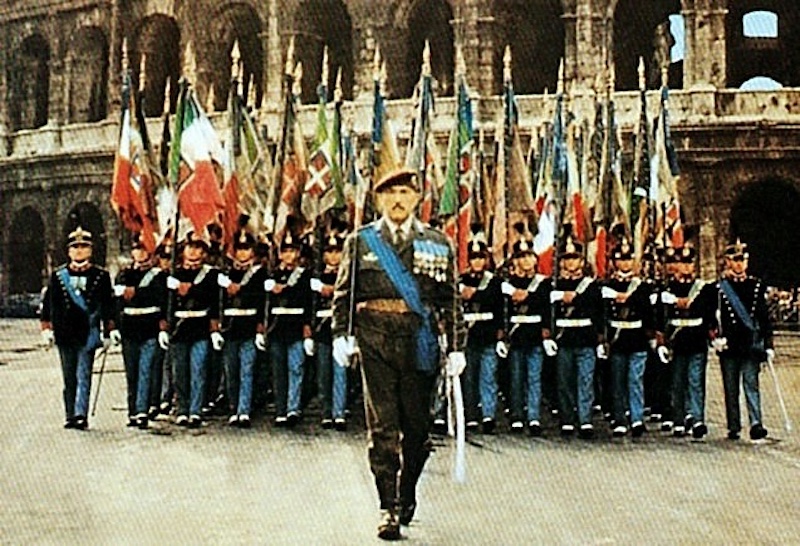
Alberto Li Gobbi commanding the “Sacred Square” formation of the War Flags of Italian regiments decorated with the Medaglia d’Oro al Valor Militare during the Festa della Repubblica parade along Via dei Fori Imperiali, 2 June 1968, marking the fiftieth anniversary of victory in the First World War.
Contributors

Guido Molinari
Founding Director
The Allies Museum
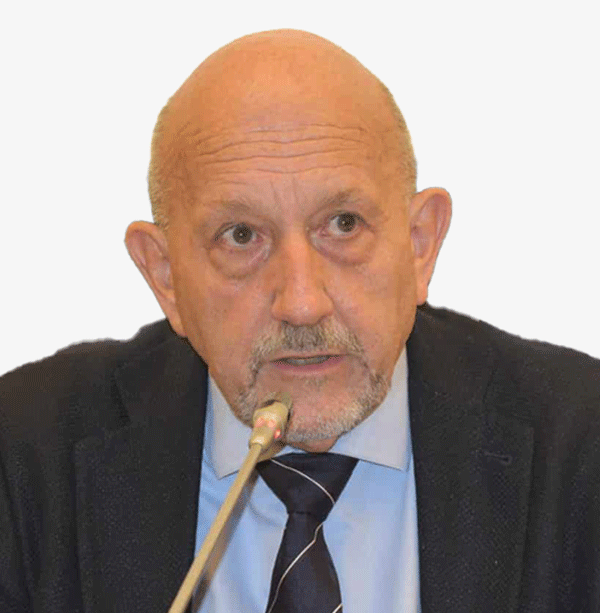
Lieutenant General (Ret.) Antonio Li Gobbi
National Committee for Italy
The Allies Museum
Share


More from our blog
An Italian general reflects on his father, a decorated officer who fought alongside the Allies, led resistance fighters behind German lines, and embodied Italy’s path from alliance to liberation.

Captain Alberto Li Gobbi receives the Gold Medal of Military Valor from Umberto Utili on 2 June 1947, in recognition of his service alongside Allied forces and his leadership in resistance operations during Italy’s War of Liberation.
As part of our ongoing series highlighting members of the National Committee for Italy, The Allies Museum World War II Liberation of Italy sat down with Lieutenant General (Ret.) Antonio Li Gobbi, Italian Army, for a conversation with Founding Director Guido Molinari. A distinguished officer who served in numerous NATO, United Nations, and multinational commands during a long career in the Italian Army, General Li Gobbi brings both personal and professional insight to the Allied story. The son of General Alberto Li Gobbi, a highly decorated officer of the Italian War of Liberation who joined the Allied cause after the Armistice of 8 September 1943, LTG Li Gobbi reflects on his father’s remarkable service, the enduring bonds of Allied cooperation, and the importance of remembering this truly international fight for freedom.
Your father, General Alberto Li Gobbi, played a significant role during the Italian Campaign, for which he was awarded the highest Italian military award: the Gold Medal of Military Valor for his service to the Allied Italian Co-belliegerent army. What early stories or lessons from his experiences most influenced your own values and understanding of Italy’s place within the Allied effort?
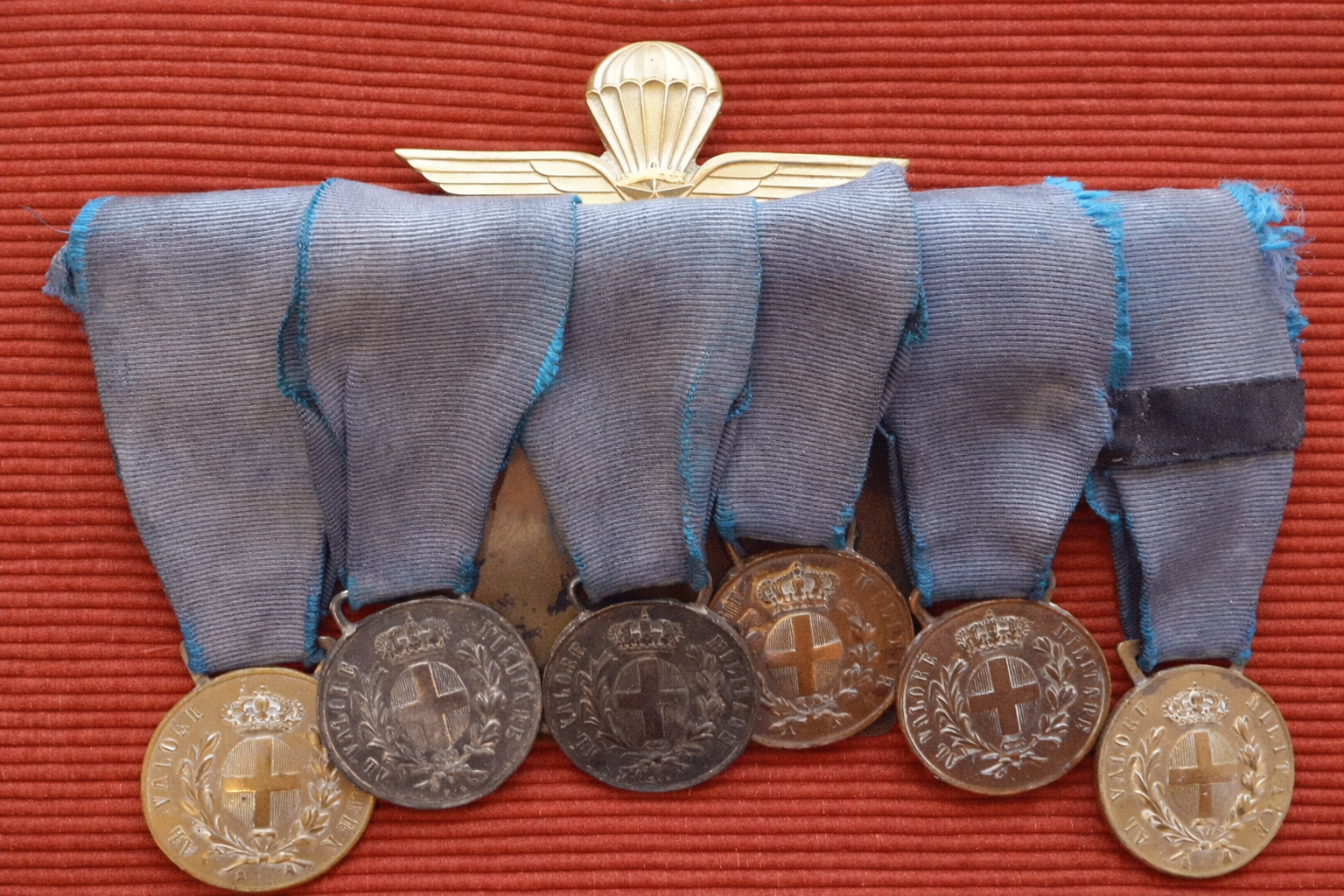
Medal group of General Alberto Li Gobbi: one Gold, two Silver, and two Bronze Medals for Military Valor. The ribbon at the end, edged in black mourning, represents the Gold Medal for Military Valor awarded posthumously to his brother, Aldo Li Gobbi, for his service in the Italian Resistance.
My father, Alberto, fought in the war of liberation in every possible way. First of all, immediately after the declaration of the armistice on 8 September, he tried to reach his unit. Captured by the Germans, he escaped and crossed the front line together with a British prisoner who was also escaping.
He presented himself to the Anglo-Americans on 12 September, who assigned him to No. 1 Special Force. They then sent him to Algeria to take a course in parachuting and sabotage. He was later parachuted into northern Italy as the head of an intelligence and liaison mission with the partisans. He then assumed command of the partisan formation himself. He was later captured again by the Germans and sentenced to death, but once again managed to escape. After crossing back through the front line, he returned to fight at the front in the combat groups of the Royal Italian Army.
It is worth reflecting that Italy had not fought alone from 1940 to 1943. Both on the Albanian front and, above all, on the Russian front, my father fought alongside the Germans, with cooperation that was fairly close. He did not express a particular judgment about the Germans themselves, whom he respected from a military standpoint. However, he judged negatively from the outset the decision of the Fascist regime to align with them—a choice that went against our Risorgimento history and the alliances with which we had won the First World War.
He would have preferred that in 1940 we had entered the war on the other side, with the British and the French, whom he considered Italy’s natural allies in Europe.
After 8 September, my father had to overcome a certain degree of distrust from the Allies. He considered this natural, since it was we Italians who had to prove that we truly intended to fight against the Germans and the puppet regime of Salò alongside the Anglo-Americans.
He always retained an excellent memory of the Anglo-Americans. He was truly among the first to fight with the Allies, given that the first regular Italian unit was deployed at the front only in early December at Monte Lungo, where it arrived on the evening of 6 December and attacked on 8 December. My father had already been in contact with the Allies since 12 September, after escaping from the Germans by jumping from a train after being captured in Alessandria.
He volunteered immediately in a very fluid situation. It was still unclear what the Allies’ attitude toward the Italians would be. My father always considered himself an officer of the regular Italian army. Therefore, he requested authorization from the Italian General Staff to operate in the North. The No. 1 Special Force told him that authorization had been granted—but in reality, it had been falsified. In any case, this never caused him any problems with the Italian General Staff.
Italy’s decision in September 1943 to fight alongside the Allies marked a profound transformation for the country. Did your father ever speak about that transition, how he experienced it personally, and how he understood Italy’s new role among the Allied nations? Did your father ever speak about his interactions with Allied soldiers, American, British, Polish, Greek, or others, during the Italian Campaign? How did those encounters influence his understanding of Italy’s new place among democratic nations?

General Alberto Li Gobbi as Commander of NATO’s Allied Command Europe Mobile Force (1969–1972), continuing his Allied service after fighting alongside Allied forces during Italy’s War of Liberation in World War II.
My father chose to fight alongside the Allies immediately after 8 September. He took the sabotage course in Algeria organized by the Americans, and the fact that he spoke English helped him. You must consider that the most studied foreign language before the war was French, followed by German. His direct contacts with the Allies during the conflict were mostly by radio. The first missions of No. 1 Special Force in northern Italy were carried out entirely by Italian personnel. Only in the final phase of the campaign were British officers also sent. My father was later integrated into the Friuli Combat Group, and although the combat group adopted British uniforms and British doctrine of employment, there were no British soldiers with them. In the Friuli sector of operations there was the Jewish Brigade.
Direct contact with the Allies occurred mainly after the war, when he became the first Italian officer to go to England for military schooling.
He was later military attaché in Washington and had a long career in NATO, which involved constant interaction with Allied forces in the postwar period. He always had an extremely high regard, especially for the British.
Looking back on your own distinguished career in the Italian Army, what were the most defining moments that you feel reflect the values of cooperation and alliance that your father lived during the Italian Campaign?

Lieutenant General Antonio Li Gobbi during operational service in Afghanistan. Continuing a family tradition of international cooperation, he served in multinational missions under NATO command, reflecting the enduring alliance between Italy and its Allied partners.
Certainly, many moments reflected these values. The Italian Armed Forces are integrated within NATO. Despite the outcome of the war, Italy entered NATO even before joining the United Nations. This was a farsighted decision by the De Gasperi government in the postwar period.
In 1977, when I entered service, my first assignment was with an Alpine unit integrated into the Allied Command Europe Mobile Force, with components from several countries. I served in the Susa tactical group, an engineer tactical unit. I conducted NATO exercises in the Arctic Circle in February and in Turkey on the Iraqi border in August. As a captain, I attended the Royal Military College of Science, a kind of war college for weapons staff officers who work on research and development of weapons systems.
From 1981 to 1987 I served in the Middle East with the United Nations, alongside a large Russian and Swedish presence. I later served with NATO in Bosnia in 1995–1996 and again in 1998, integrated with French forces—first in the operations room and later as head of a divisional office. In 1999 I served in Kosovo with an Italian brigade that included a Spanish regiment, a Portuguese component, and an Argentine platoon. In 2005–2006, I was deputy operations chief in Kabul, where integration with other commands was constant. There were two operations in Afghanistan at the time: the NATO-led ISAF and the American-led Operation Enduring Freedom. In 2009 the two operations merged under NATO command, with the same allies as in 1943–1945. I later held NATO assignments in 2003 and again from 2007 to 2010.
The period of co-belligerence during the Italian Campaign was fundamental in preparing the leadership and officer corps of the Italian Armed Forces for equal collaboration—something that has continued to this day within NATO.
Given the current geopolitical climate, what lessons from your father’s generation do you believe are most relevant for today’s Italian youth?
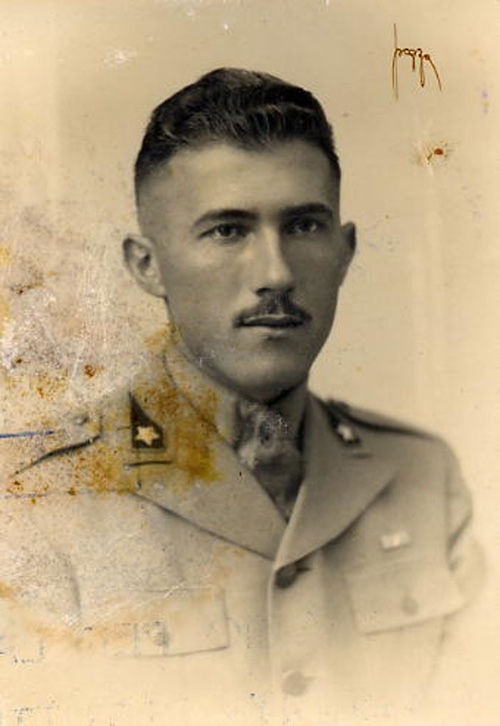
Captain Alberto Li Gobbi in uniform during Italy’s War of Liberation, 1944, when he served alongside Allied forces in the fight against German occupation and the Italian Social Republic.
One should look at the example set by that generation—their ability to choose and to risk their personal interests for the future of the country. Each person chose individually, not as part of a herd.
We should reflect on the importance of thinking and choosing with one’s own mind, without simply following slogans or going into the streets holding a sign without really knowing what it means.
Today’s young people sometimes take positions on international issues without having studied them deeply, without understanding what they are actually supporting. They tend not to take the trouble to examine the situation in depth and instead adopt a “fashionable” position. This behavior of following slogans led many Italians to acclaim Mussolini in 1940, because at the time it was fashionable to be fascist.
As a leader in ANCFARGL, how do you see the role of veteran associations in keeping the memory of Allied cooperation alive for future generations? What challenges and opportunities do you encounter in that mission?

Lieutenant General Antonio Li Gobbi (left) speaks at the takeover ceremony for the Italian Army’s “Emilia-Romagna” Command at the Army Officers’ Club in Bologna, 4 July 2014, where he assumed command from Lieutenant General Antonio De Vita (right).
The problem, if we look at the period 1943 to 1945, is that although there are various associations dedicated to it, the best known is the ANPI, the National Association of Italian Partisans. Ferruccio Parri, a member of the Action Party, left it to create the FIAP, the Italian Federation of Partisan Associations. In the 1960s the ANCFARGL was also established. The issue is that the resistance phenomenon included many monarchists, Catholics, military personnel, liberals, and others in addition to the communists, but these other contributions to the memory of the Resistance were ostracized. There was no desire to give any credit for the liberation to an Italian army that represented the institutions of the time, which were monarchical. This was something that people did not want to acknowledge. Instead, the narrative that was promoted was that liberation occurred through a popular uprising. But that was not the case. Germany was collapsing under the military pressure of the Allied armies, with the Russians in the east and the Anglo-Americans in the west. Yes, there was a partisan phenomenon, but it played a role that was more ideal and cultural than military. The number of partisans was quite small. In the winter of 1943 to 1944 there were between 10,000 and 20,000. Until March 1945 there were only a few tens of thousands.
The same ostracism toward the regular armed forces was also directed against the Italian military internees who had refused to enlist in the Italian Social Republic. It was so strong that Alessandro Natta, a communist politician who had been an internee, was not allowed to publish his memoirs through the Communist Party’s publishing house because they did not fit the political narrative they wanted to promote. They wanted to erase all forms of opposition to fascism that were not the communist partisan movement. Neither the regular armed forces nor the military internees could be categorized as partisans. Italians fought each other only because there was a puppet government in the North. In fact, there was no phenomenon of anti-American guerrilla warfare in the South. If there had been strong fascist sentiment, there would have been resistance against the Anglo-Americans in the South. But there was none, even before 8 September, and resistance instead arose spontaneously against the Germans. This difference gives a sense of the popular sentiment of Italians in 1943.
You have recently joined the National Committee for Italy of the Allies Museum. What motivated you to accept this role, and what contribution do you hope the Museum can make to preserving and promoting the history of Italy’s choice to stand alongside the Allies?
I believe it is important for Italians to go beyond rhetoric and understand what actually happened in Italy between 1943 and 1945, and to see that those events were one piece of a much larger puzzle beyond the feelings of Italians themselves.
It was not only a struggle against fascism. It was a confrontation between different ideologies and different relationships between the state and the individual—on one side a state claiming the right to control everything, and on the other, a state founded on individual freedom.
Militarily, unfortunately, we did not liberate ourselves alone. But it is clear that the resistance gave an extremely strong moral and spiritual contribution to the country. It was very important in demonstrating that Italy was able to change its government and leave that dangerous alliance with Germany. We must also recognize that if there had not been the Allied landing in Sicily, if there had not been the bombing of Rome in July 1943, if the war had ended earlier—would fascism have fallen? No.
We should look at this in connection with what is happening today in Iran: you cannot overthrow a dictatorship with bombs alone, but bombs can help people understand that the time of that dictatorship is coming to an end.